| Country | |
| Publisher | |
| ISBN | 9781920033989 |
| Format | PaperBack |
| Language | English |
| Year of Publication | 2022 |
| Bib. Info | xiii, 172p. Include Bibliography & Index. |
| Categories | Performing Arts |
| Product Weight | 400 gms. |
| Shipping Charges(USD) |
 please select your country
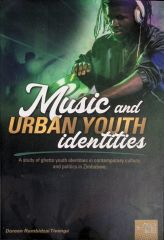
When the Zimbabwean government imposed the 75% local content policy in 2001, young people began dominating the music scene, marking a dramatic turn in the history of Zimbabwean music and entertainment. Doreen Rumbidzai Tivenga’s Music and Urban Youth Identities: A study of ghetto youth identities in contemporary culture and politics in Zimbabwe traces how the stipulation of the local content quota coincided with the post-2000 political and economic crises in Zimbabwe that pushed youth, especially those from low-income backgrounds – the ‘ghetto youth’ – to the margins of the country’s economy. The author shows how the youth responded to this predicament by embracing the new turn in Zimbabwean music, turning to music to try to eke out a living, and at the same time articulate their daily struggles, survival strategies and aspirations. She also highlights that music is an important marker of identity and a means through which youth connect and identify with their peers, and musicians with their fans, arguing that music intersects with different ways youth construct and assert their identities, which they define in light of their local experiences as well as the demands of the globalised shifting world. Tivenga however observes that the youth do not construct their identities in a uniform or linear way, but in complex and heterogeneous ways characterised by spatial attachments and affiliations, group affiliations, gender dynamics and a quest for visibility and power.